

What actually differs between USDC and USDT?
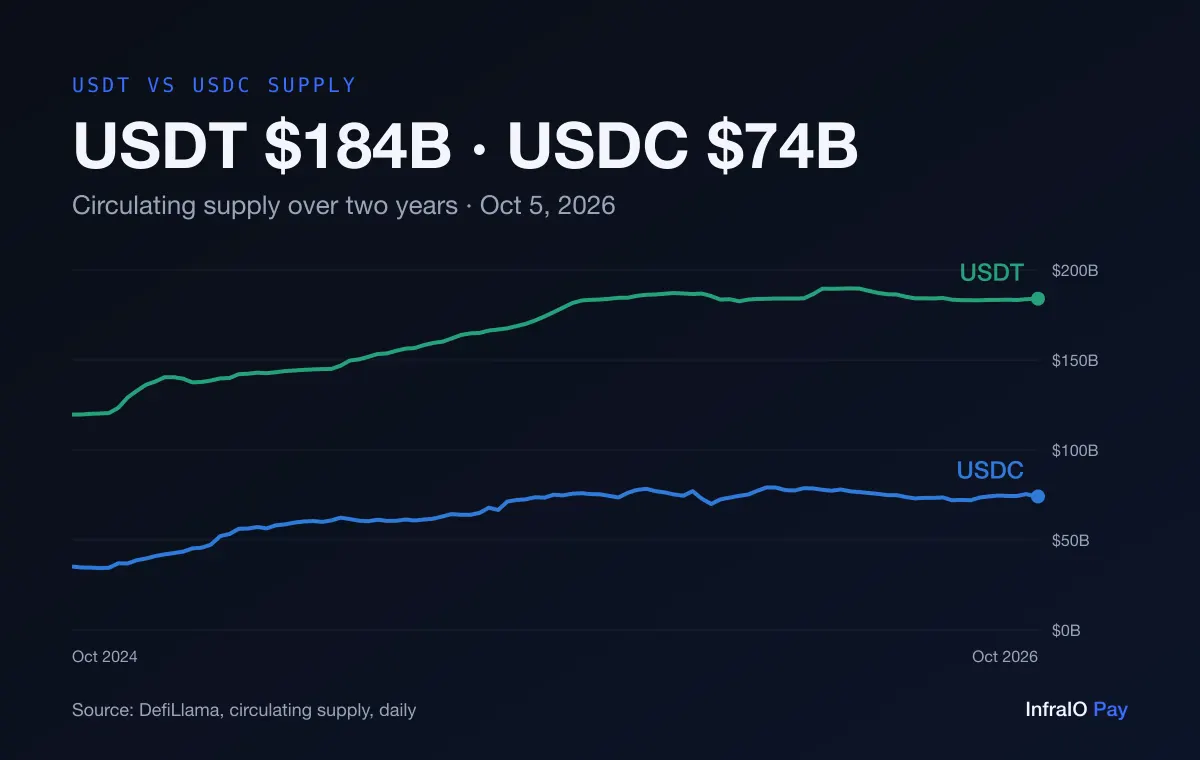
Both aim to hold a value of one US dollar and both are widely deployed as ERC-20 tokens across EVM networks. The differences are the issuer and the transparency model. USDC is issued by Circle, a US-regulated company that publishes reserve reporting on its transparency page. USDT is issued by Tether, which publishes its own transparency reporting and has the largest circulating supply and trading liquidity of any stablecoin.
Which do buyers actually hold?
It depends on region. USDT dominates in many international and emerging markets and on high-liquidity venues; USDC is common in US-centric, institutional, and developer contexts. If your buyers are global, USDT reach matters; if they skew US or enterprise, USDC is often expected.
Why do most merchants accept both?
Because there is no real cost to. Both are ERC-20 tokens that settle through the same checkout flow, so accepting both simply widens the set of buyers who can pay without a second integration. Turning one off only narrows your addressable buyers.
- One integration handles both, they are both ERC-20 stablecoins.
- Accepting both covers more regions and more wallets.
- You can still restrict per network if you want to.
How do you accept both with InfraIO Pay?
Enable USDC and USDT on the networks you want to settle on, and the buyer chooses at checkout from the combinations you allow. You can also list a custom ERC-20 of your own alongside them. See the tokens and networks matrix for how the combinations work.