

What is a crypto wallet? A beginner's guide to keys, seed phrases and custody
A crypto wallet holds the keys, not the coins. Learn what an address, private key and seed phrase are, and how to choose a wallet.
Practical guides on accepting USDC and USDT, stablecoin checkout, non-custodial settlement, and how crypto payments compare to cards.
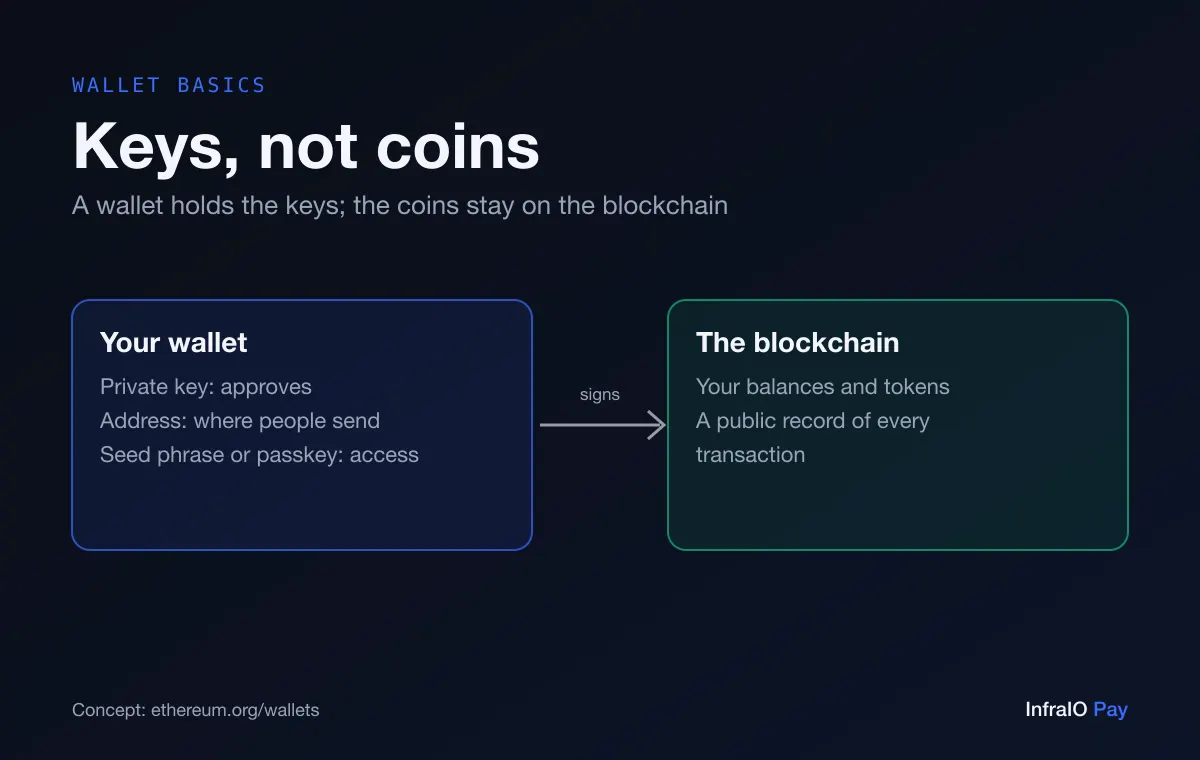
A crypto wallet holds the keys, not the coins. Learn what an address, private key and seed phrase are, and how to choose a wallet.
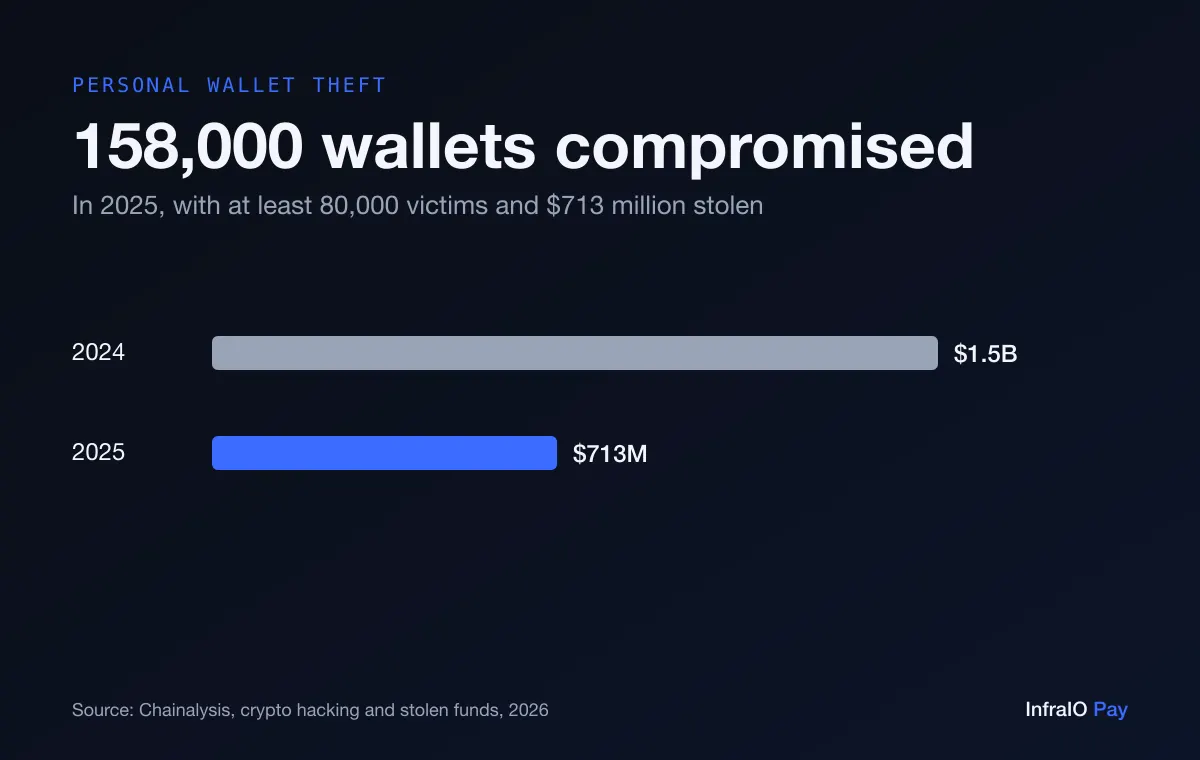
Most stolen crypto is handed over, not cracked. The real attacks (phishing, drainers, SIM swaps), what each steals, and how to defend.

A multisig wallet needs more than one approval to move money, like a joint account with two signatures. How it works and how InfraIO Wallet will use it.
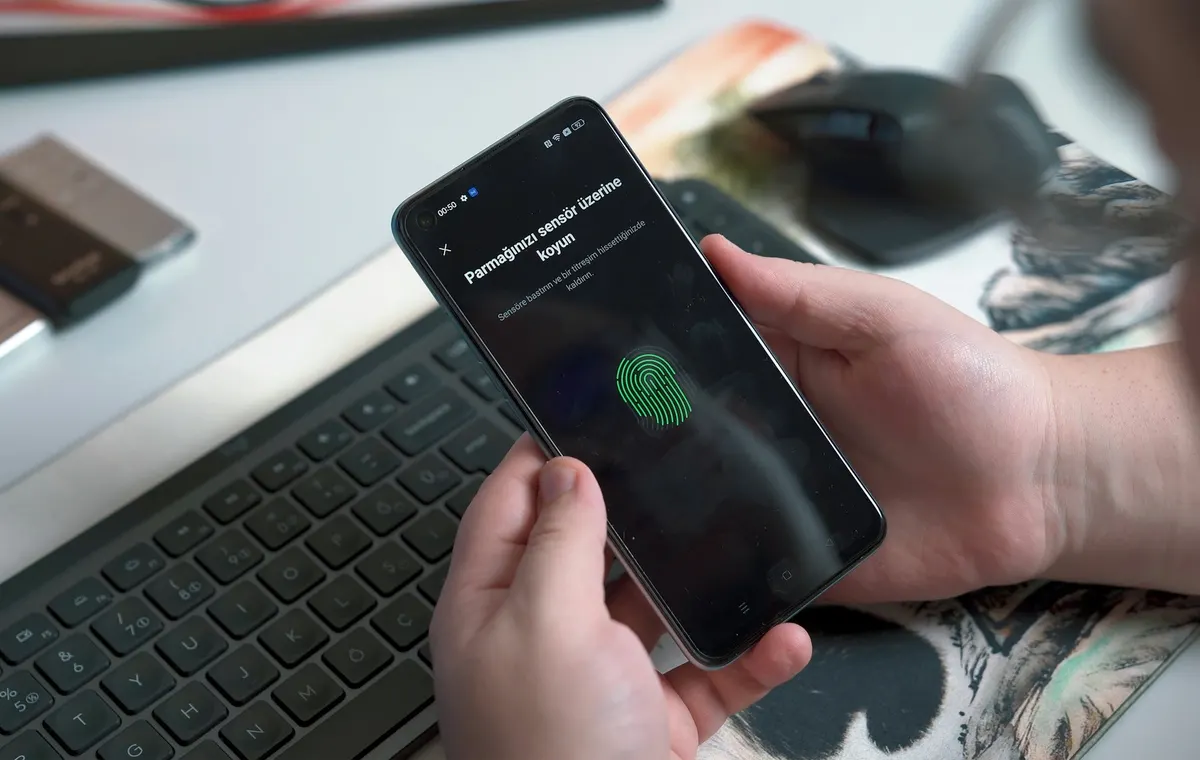
A plain guide to InfraIO Wallet: create it with a passkey, add a backup, receive, send and swap crypto, and connect to apps with WalletConnect.

An honest look at how InfraIO Wallet differs from seed-phrase and exchange wallets, with a fair comparison table and what it cannot do yet.
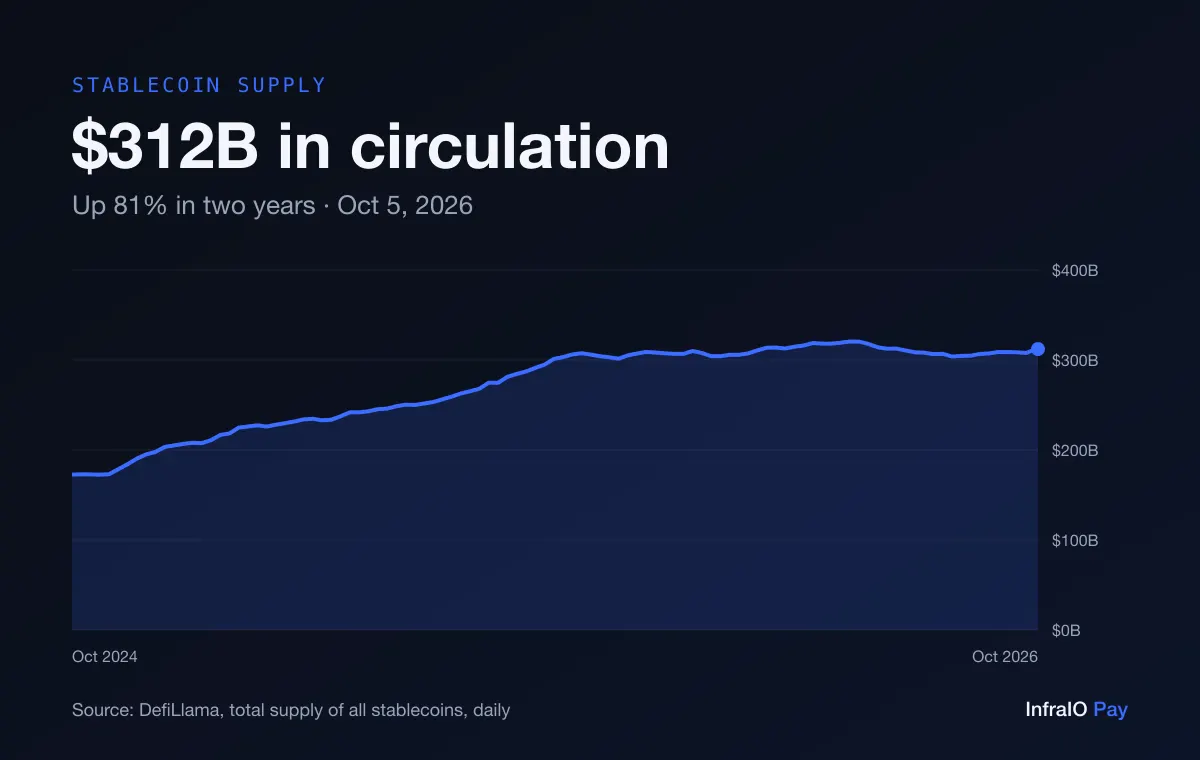
Stablecoin supply passed $300 billion, the US and other markets now have clear rules, and Shopify, Stripe, Visa and Mastercard all move money in stablecoins. What that means if you sell online.

Digital wallets now carry most online spending, AI agents have started to check out for shoppers, and stablecoins have joined mainstream payment networks. Five trends every online store should plan for.

Lower fees than cards, no chargebacks, money in minutes and buyers in every country. What accepting USDC and USDT really gives an online store, and what it asks of you in return.

A seed phrase is a secret you must never lose or leak. A passkey wallet replaces it with Face ID or a fingerprint. How the two compare on security, recovery and everyday use.

InfraIO Pay lets shops accept stablecoin payments straight into their own treasury wallet. See what it does, how it makes money, and why it is not a Ponzi scheme.

A Ponzi scheme pays earlier investors with money from new investors, not from real profit. See how it works, why it collapses, and the warning signs to watch for.

Your keys stay on your devices, your funds stay on the blockchain, and InfraIO Pay cannot move them. How the passkey wallet works and how recovery works.

Coinbase Commerce ended self-managed checkout for merchants outside the US and Singapore on 31 March 2026. Move to non-custodial InfraIO Pay in three steps: fees from 0.5% down to 0.3%, no monthly fee.
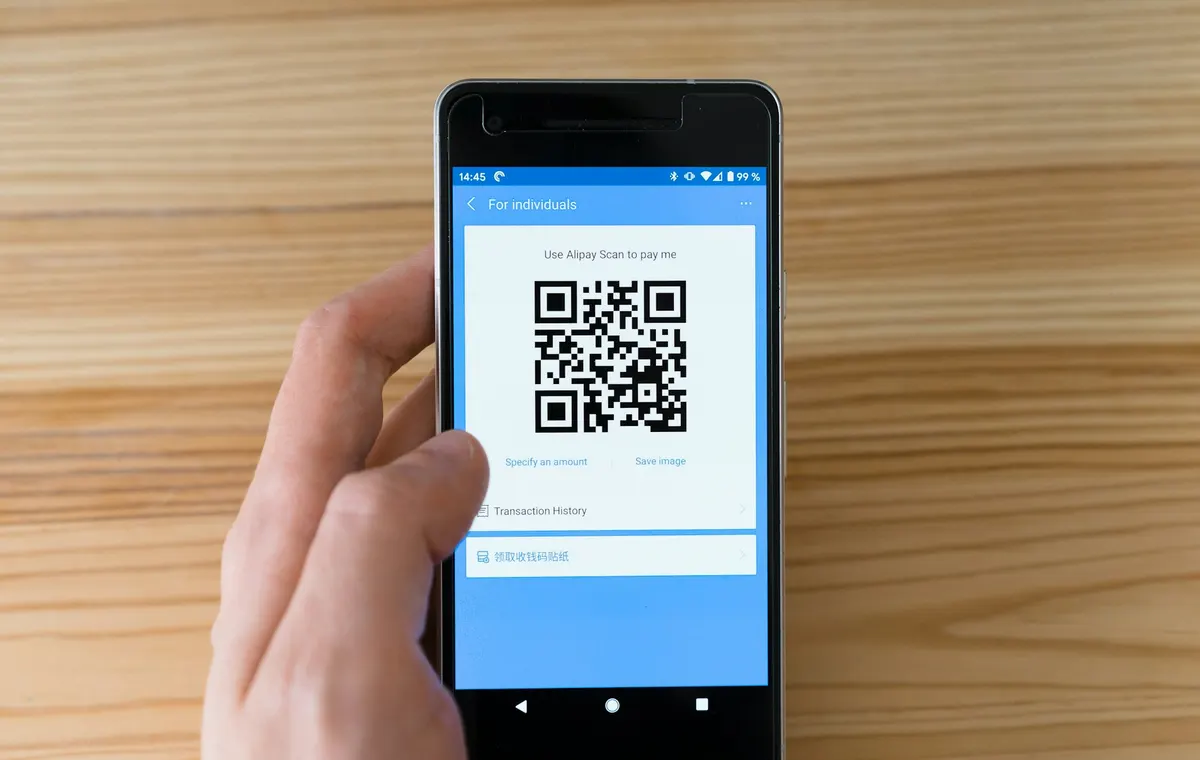
Stop asking buyers to copy a wallet address. Replace it with an InfraIO Pay payment link or checkout button so every payment is matched to an order, with a signed webhook when it settles.

Honest, sourced comparisons of InfraIO Pay against the crypto payment gateways merchants evaluate most.

Coinbase Commerce is winding down and pushing merchants to custodial Coinbase Business. InfraIO Pay is a non-custodial alternative that settles stablecoins straight to a wallet you control.

BitPay converts crypto to fiat and settles to your bank as a custodian. InfraIO Pay is non-custodial and settles stablecoins straight to a wallet you control, with a lower platform fee.

Both NOWPayments and InfraIO Pay are non-custodial. NOWPayments optimises for coin breadth and no-code plugins; InfraIO Pay optimises for stablecoin depth, a developer-first API, and volume pricing to 0.3%.

Stripe added USDC payments but charges 1.5% and settles through its own platform. InfraIO Pay is a non-custodial, stablecoin-native gateway that settles on-chain to your wallet from 0.3%.

CoinGate is a licensed, EUR-settling gateway with 70+ coins at a flat 1%. InfraIO Pay is stablecoin-focused and developer-first, settling on-chain to your wallet from a 0.3% floor.

A practical guide to accepting USDC and USDT on any website, with a no-code payment link, an SDK, or one API call, settling non-custodially to your own wallet.

Crypto.com Pay charges merchants no processing fee, but settles into a Crypto.com account inside its ecosystem. InfraIO Pay is independent and non-custodial, settling on-chain to a wallet you own.
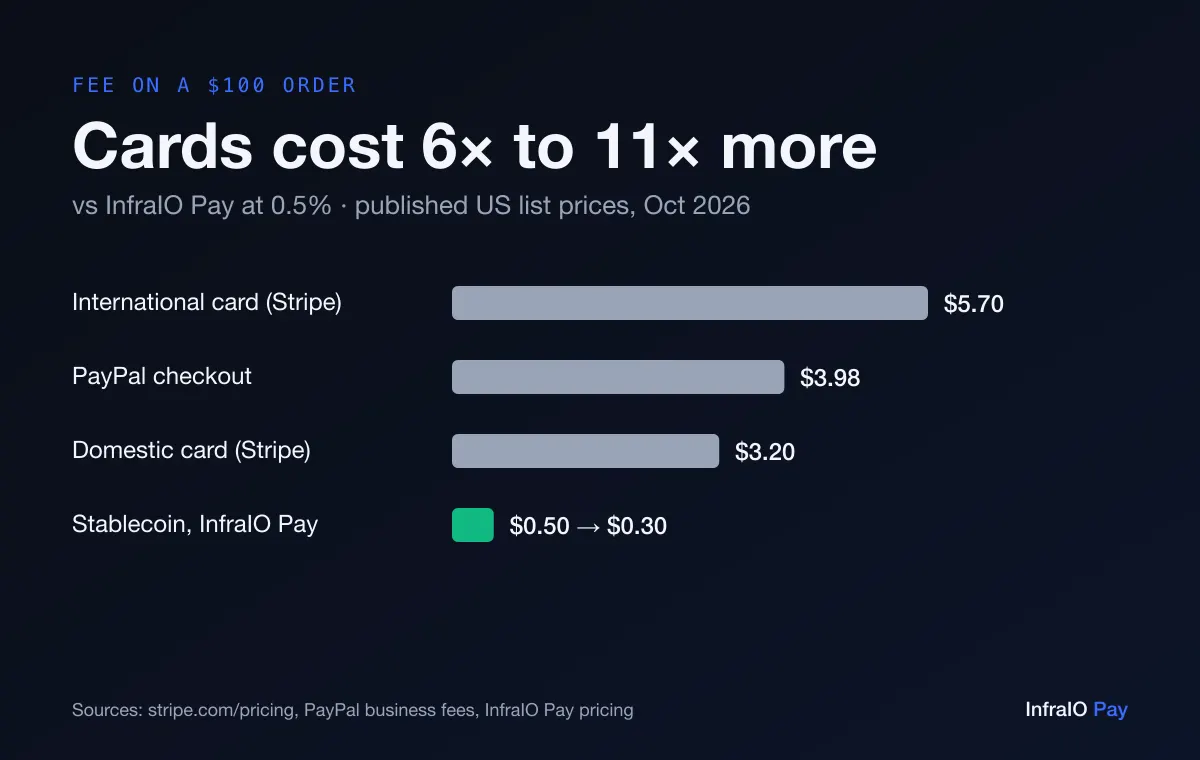
How stablecoin checkout compares to card processing on the three things that actually move margin: transaction fees, chargeback risk, and how fast you get paid.

Custodial vs non-custodial crypto checkout: why it matters for merchants, and how per-order deposit addresses settle funds to a wallet you control.

How crypto payment webhooks work, the events you should wire fulfilment to, and how HMAC signatures and idempotency keys keep delivery safe and duplicate-proof.
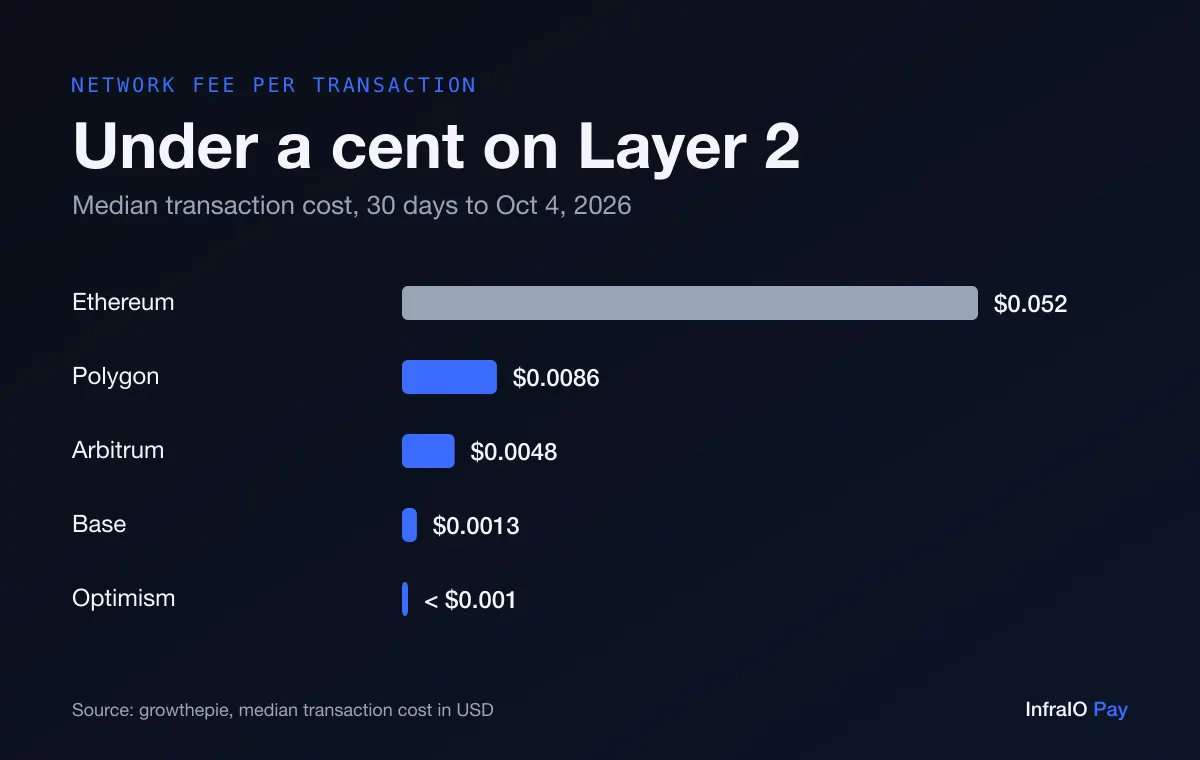
A practical comparison of the main EVM networks for accepting stablecoin payments, fees, speed, and stablecoin liquidity, and why you do not have to pick just one.
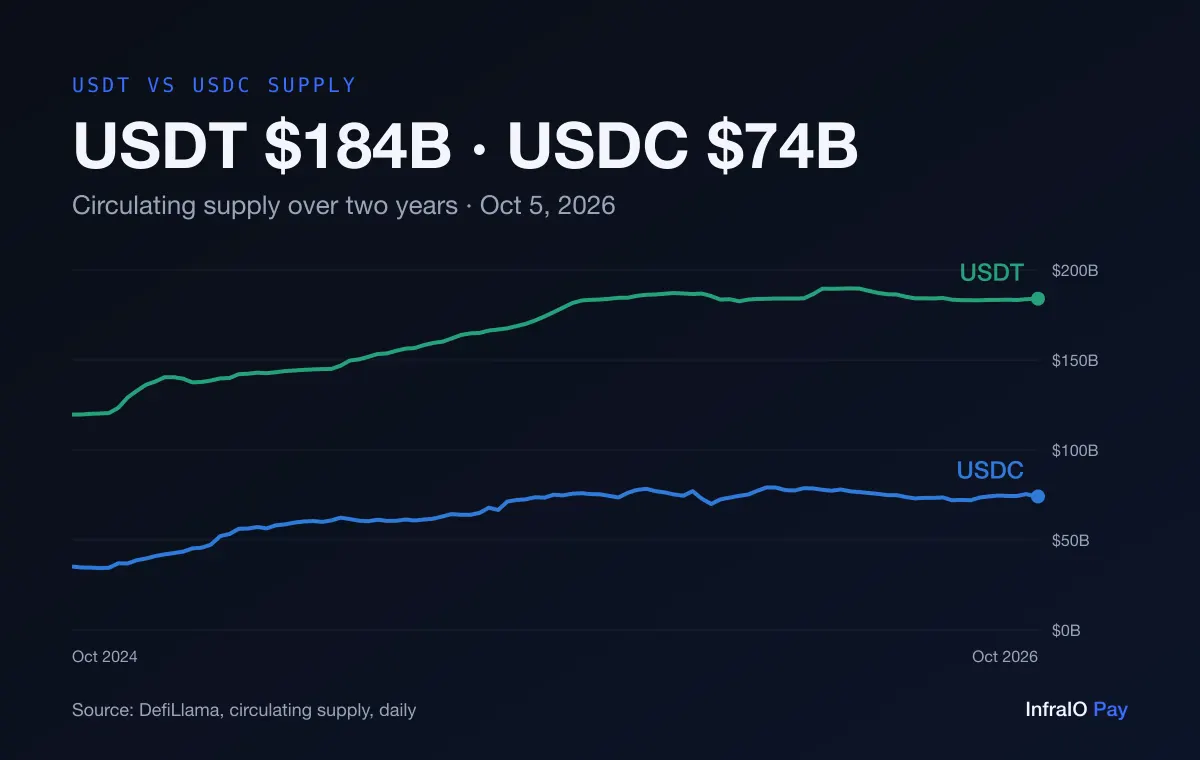
How USDC and USDT differ on issuer, transparency, and reach, and why most merchants accept both rather than choosing between them.

Three ways to add stablecoin checkout to an existing store, a no-code payment link, a drop-in SDK, or the API, without ripping out your current payment stack.

Why cross-border card and bank payments are slow and costly, and how dollar stablecoins settle global payments in minutes to a wallet you control.